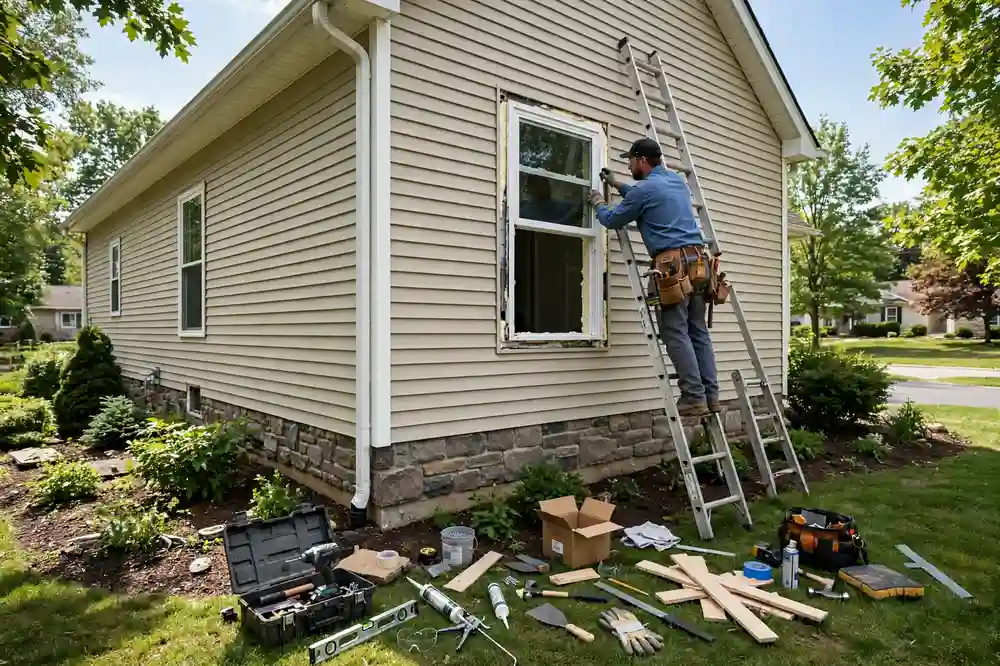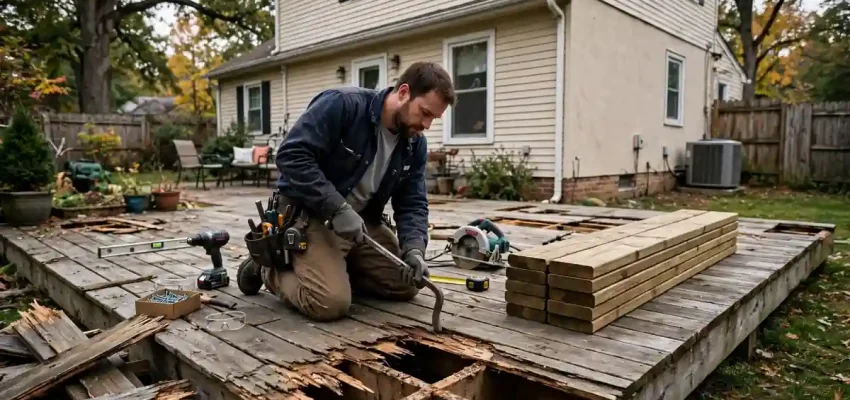

A deck takes more punishment than almost any other part of your home. Sun, rain, snow, and foot traffic wear down boards, loosen fasteners, and rot the framing underneath, often invisibly. If your deck boards are splintering, soft, or springy underfoot, you are probably wondering about deck repair cost and whether repair is even worth it versus replacement. In most cases, targeted repairs are far cheaper than a rebuild, and they can add years of safe use to a deck that still has a sound structure.
This guide covers deck repair cost in 2026: what typical repairs cost, how to tell repair from replacement, the warning signs that demand immediate attention, and how to hire a contractor who fixes the real problem rather than just the surface.
Deck Repair Cost in 2026: National Averages
Most homeowners spend $500 to $2,500 on deck repairs, with a national average near $1,300 for a typical repair job. Minor repairs, such as replacing a few boards or tightening railings, run $200 to $600. Moderate repairs involving several boards, stair work, or railing sections run $600 to $1,500. Major structural repairs, including joist, beam, or post replacement, run $1,500 to $5,000 or more.
These figures assume a standard wood deck of 200 to 400 square feet. Composite decks cost more per board to repair, since composite boards run $25 to $50 each versus $10 to $25 for pressure-treated wood, but composite needs fewer repairs over its life. Your final price depends on deck size, material, damage extent, and local labor rates, which run highest on the coasts and lowest in the Midwest and South.
Common Deck Repairs and Their Costs
- Replacing deck boards: $200 to $600 for a handful of boards; $15 to $35 per board including labor
- Railing repair or replacement: $300 to $1,200 depending on length and material
- Stair repair: $250 to $900 for treads, stringers, or handrails
- Joist or beam repair: $500 to $2,000, more if the deck must be partially lifted
- Post or footing repair: $300 to $1,000 per post, higher if concrete footings must be replaced
- Ledger board repair: $500 to $1,500; critical for safety, since the ledger attaches the deck to the house
- Resurfacing or refinishing: $700 to $2,000 for cleaning, sanding, and staining a mid-size deck
Ledger board problems deserve special attention. A failed ledger is the leading cause of deck collapses, and a deck that pulls away from the house is an emergency, not a cosmetic issue. If you notice a gap between the deck and the house, stop using the deck and call a professional immediately. A proper ledger repair includes flashing, lag bolts, and sometimes a freestanding support conversion, all of which are worth every dollar.
Deck Repair Cost by Damage Type
Surface damage: splinters, cracks, and fading
Surface damage is the cheapest to fix. A few splintered or cracked boards can be replaced individually, and a full sanding and staining refreshes the whole deck for $700 to $2,000. If your deck just looks tired, a wash and stain may be all it needs. For a broader exterior refresh, compare pressure washing costs, since a professional wash is often the first step before staining.
Rot and soft spots
Rot is more serious, because it spreads through framing members that you cannot see. A soft board usually means the joist beneath it is also compromised. A contractor should probe joists and beams with a screwdriver or awl to find the full extent of rot before quoting. Replacing isolated joists costs $500 to $1,500, but widespread rot across the frame often tips the decision toward partial or full replacement.
Structural problems: sagging, bouncing, and leaning
A deck that sags, bounces, or leans has a structural problem, not a cosmetic one. Causes include undersized joists, rotted posts, failing footings, or a loose ledger. Structural repairs run $1,000 to $5,000 and may require permits and engineering review. Never ignore these signs, and never let children or large groups use a deck that feels unstable. If the deck supports access to the home and its failure could affect the foundation area, also check foundation repair costs to rule out related settlement problems.
When to Repair vs Replace Your Deck
Repair when the frame is sound, damage is limited to boards, railings, or stairs, and the deck is less than 15 years old. Replacement makes sense when the frame has widespread rot, the deck is over 20 years old, the structure was built without permits or to outdated codes, or repair estimates exceed 50 to 60 percent of replacement cost. A full deck replacement runs $4,000 to $12,000 for wood and $8,000 to $20,000 for composite, depending on size and features.
Also consider replacement if you want a different size, layout, or material. Resurfacing, which keeps the existing frame and replaces only boards and railings, is a middle path costing $3,000 to $8,000. It works only when the frame passes inspection, so a thorough structural check comes first.
Deck Repair Cost by Material
Pressure-treated wood is the cheapest to repair, with boards at $10 to $25 and widely available matching stock. Cedar costs more, at $20 to $40 per board, and matching weathered cedar can be tricky. Composite boards cost $25 to $50 each and require brand-specific fasteners, so repairs on composite decks run 30 to 50 percent higher in materials, though the frame work costs the same. PVC and aluminum decks are the most expensive to repair and may require manufacturer parts ordered in advance.
If your deck is older pressure-treated wood, ask your contractor whether replacement boards will match in thickness and profile. Older decks often use true-dimension lumber that differs from modern stock, and mismatched boards create trip hazards and an uneven look.
How to Inspect Your Deck Before Calling a Pro
Walk the deck slowly and test every board for softness or bounce. Push on railings to check for looseness, and look for rusted or missing fasteners. Check where the deck meets the house for gaps or water stains. Look underneath, if accessible, for rot on joists, beams, and posts, and for standing water or soil contact at post bases. Posts should sit on concrete footings, not directly in soil.
Photograph everything you find. Photos help contractors quote accurately and help you compare bids, since every bidder sees the same damage. Note the deck’s age, material, and approximate size before calling, and mention any permits or past repairs you know about.
How to Hire a Deck Repair Contractor
Get three written, itemized quotes that separate materials, labor, and disposal. Confirm the contractor is licensed and insured, and ask whether the work requires a permit. Structural repairs often do, and a contractor who suggests skipping permits on structural work is a contractor to avoid. Ask for references from recent deck jobs, and check whether the contractor warranties both materials and labor.
Watch for red flags: a quote given without inspecting underneath the deck, pressure to pay in full upfront, or a bid dramatically lower than the others. Low bids often exclude the structural work that matters most. A fair payment schedule is 10 to 20 percent upfront, progress payments at milestones, and the balance on completion after your inspection.
Timing matters too. Spring and early summer are peak deck season, so booking in fall or winter can save 10 to 15 percent and get you faster scheduling. If your deck needs staining after repair, plan for dry weather and at least 48 hours of cure time before heavy use.
Ways to Save on Deck Repair Cost
Fix small problems early. A $200 board replacement today prevents a $1,500 joist repair next year. Keep the deck clean and reseal it every two to three years, since sealant is far cheaper than rot repair. Keep planters, firewood, and soil off the deck surface, and make sure gutters above the deck drain away from it rather than onto it. If your gutters dump water onto the deck, review gutter guard costs as part of protecting the deck structure.
Bundle work when possible. If the deck needs both board replacement and staining, one contractor doing both is usually cheaper than two separate visits. And if the repair exposes wider exterior issues, such as peeling siding or water-damaged trim, address them in the same project window to save on mobilization costs. A fresh exterior finish often follows deck work, so check house painting costs if the house exterior needs attention too.
Deck Maintenance That Prevents Future Repairs
Clean your deck at least once a year, removing leaves and debris that trap moisture between boards. Reapply stain or sealant every two to three years, or annually for horizontal surfaces in harsh sun. Tighten fasteners each spring, trim back vegetation that holds moisture against the structure, and keep the area beneath the deck ventilated and dry. Moisture trapped under a deck is a leading cause of mold and rot, and persistent dampness around the home can affect indoor air as well, so if you notice musty odors inside, review mold remediation costs before the problem spreads.
Conclusion: Is Deck Repair Worth It?
For most decks with a sound frame, repair is absolutely worth it. Deck repair cost of $500 to $2,500 restores safety, appearance, and years of use at a fraction of replacement cost. The key is honest assessment: fix the structure first, the surface second, and never cover up rot with new boards and stain.
Get an inspection, get three itemized quotes, and prioritize ledger, posts, and joists over cosmetics. A safe, well-maintained deck is one of the best outdoor living investments you can make. If your repair project grows into a broader outdoor upgrade, an expanded living area may be next, so review home addition costs, drywall repair costs, roof repair costs, basement waterproofing costs, and home warranty coverage as you plan the full scope of your home improvement budget.