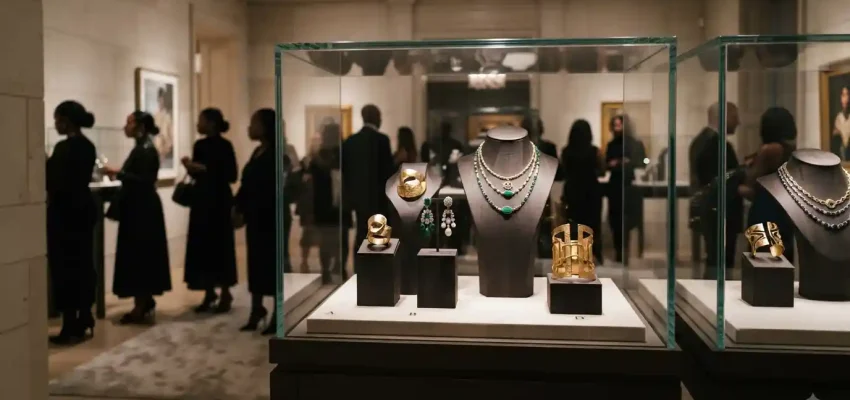

New York has long been an important center for fashion, art, jewelry, and cultural expression. In 2021, the city added an especially meaningful event to that landscape with Brilliant and Black: A Jewelry Renaissance, a selling exhibition created to spotlight Black jewelry designers and expand visibility within the fine-jewelry world.
The exhibition was presented in partnership with Sotheby’s New York and curated by jewelry journalist and author Melanie Grant. It brought together work from 21 Black designers from the United States and Europe, giving visitors and collectors an opportunity to discover creative voices that had historically received less visibility in major jewelry markets.
Although the original exhibition took place in September 2021, its importance continues to make it a useful reference point when discussing representation, contemporary jewelry, fashion culture, and the changing relationship between art and luxury.
What Was Brilliant and Black: A Jewelry Renaissance?
Brilliant and Black: A Jewelry Renaissance was a landmark selling exhibition focused specifically on Black jewelry designers. Sotheby’s described it as its first selling exhibition dedicated to Black jewelry designers.
The exhibition opened at Sotheby’s New York on September 17, 2021. The presentation featured approximately 60 pieces from 21 designers, with works spanning different approaches to contemporary jewelry, from modernist forms to romantic and highly sculptural designs.
According to Sotheby’s, the exhibition remained on view from September 17 through September 26, while pieces were available for purchase in person and online through October 10, 2021. This distinction is important for readers discovering the exhibition today: the original event has ended, but its cultural significance remains relevant.
For readers interested in the broader relationship between fashion, identity, and creative expression, AnchorEra’s coverage of fashion’s new beginnings provides useful additional context.
Why the Exhibition Mattered
The importance of Brilliant and Black went beyond displaying attractive jewelry. It created a dedicated platform for designers of African and African-diaspora heritage at a time when the luxury jewelry industry was increasingly examining questions of representation and access.
Jewelry has always carried cultural meaning. A ring, necklace, bracelet, or pair of earrings can communicate heritage, personal identity, status, memory, and artistic values. By presenting Black designers within a major New York auction-house environment, the exhibition helped demonstrate the depth and variety of contemporary Black jewelry design.
This emphasis on individual creative voices also connects with the broader question of how designers and artists develop their own creative voice. Rather than treating jewelry as a simple accessory, the exhibition positioned it as a form of artistic and cultural storytelling.
21 Black Jewelry Designers in One Exhibition
One of the exhibition’s strongest features was its breadth. Twenty-one designers from the United States and Europe participated, creating a collection that avoided presenting Black jewelry design as a single visual style.
The designers worked across different materials, aesthetics, and creative traditions. Some pieces were bold and sculptural, while others were refined, delicate, symbolic, or influenced by historical references.
That diversity is important because contemporary fashion and jewelry cannot be reduced to one definition of style. The same principle can be seen in discussions of global fashion movements, where different cultural perspectives contribute to a much larger creative conversation.
Melanie Grant’s Role in the Exhibition
Jewelry expert and journalist Melanie Grant curated Brilliant and Black in partnership with Sotheby’s jewelry director Frank Everett. Grant’s involvement helped frame the exhibition as more than a commercial event.
The curatorial approach placed emerging and established creative perspectives alongside one another. It also encouraged audiences to consider the craftsmanship, history, and ideas behind each piece rather than focusing exclusively on price or rarity.
This approach reflects the way fashion exhibitions can transform clothing and accessories into cultural documents. Similar ideas appear in discussions of movie makeovers and fashion transformation, where clothing becomes part of a larger visual narrative.
Maggi Simpkins and the Million-Dollar Ring
One of the most talked-about pieces associated with Brilliant and Black was a custom ring created by Los Angeles-based designer Maggi Simpkins.
The ring was reportedly valued at approximately $1 million and was inspired by a flower in bloom. It featured a 2.43-carat fancy pink, internally flawless, cushion-cut diamond surrounded by pink sapphires and rubies.
The piece demonstrated how high jewelry can combine precious materials with an emotional or natural concept. Instead of functioning simply as a display of wealth, the design connected craftsmanship, symbolism, color, and personal expression.
Readers interested in the expressive side of accessories can also explore AnchorEra’s article on the timeless appeal of imperfect jewelry design.
Jewelry as an Extension of Fashion
Jewelry rarely exists independently from fashion. The necklace chosen for an evening outfit, the earrings worn with a tailored look, or a statement ring paired with casual clothing can completely change how an outfit is perceived.
This relationship makes jewelry exhibitions particularly interesting for fashion audiences. The pieces can be viewed as standalone works of art while also functioning as elements of personal style.
For example, readers exploring street style and fashion trends can see how accessories frequently become the defining detail of an otherwise simple outfit.
The same principle applies to clothing-focused trends such as statement dresses and timeless fashion. Accessories often provide the finishing element that connects an entire look.
Representation in the Luxury Jewelry Industry
One of the most significant conversations surrounding Brilliant and Black was representation. Luxury industries have historically had uneven levels of visibility for designers from different cultural backgrounds.
An exhibition dedicated to Black jewelry designers creates a direct opportunity to challenge that imbalance. It gives collectors the chance to encounter designers they may not have previously known while demonstrating that Black creativity exists across every level of the jewelry ecosystem.
Representation also matters in adjacent fashion categories. The growth of Black-owned clothing businesses, for example, reflects broader consumer interest in discovering brands and designers whose creative perspectives have historically received less mainstream attention.
From Fine Jewelry to Everyday Style
Not every reader is shopping for million-dollar jewelry. One reason exhibitions like Brilliant and Black remain interesting is that they can inspire ideas that translate into everyday fashion.
A bold ring can influence how someone approaches accessories. A sculptural necklace may inspire a minimalist outfit. Color combinations found in gemstones can influence clothing choices, while unusual shapes can encourage experimentation with personal style.
That same idea can be applied to practical fashion pieces. AnchorEra’s guide to stylish educator shirts and its coverage of athletic-inspired apparel demonstrate how style can adapt to different lifestyles and purposes.
The Connection Between Jewelry, Beauty, and Personal Presentation
Jewelry is only one part of personal presentation. Hair, skincare, clothing, accessories, and color choices all work together to create a complete appearance.
For that reason, readers interested in fashion exhibitions may also enjoy exploring practical style topics such as modern hair-extension methods and skincare and personal presentation.
Beauty trends also influence jewelry styling. A dramatic hairstyle may call for understated earrings, while a simple hairstyle can create space for a larger statement necklace or pair of earrings.
Why New York Was an Appropriate Location
New York was a natural setting for an exhibition centered on contemporary jewelry and fashion. The city is one of the world’s major centers for luxury retail, fashion media, art, design, and creative industries.
Hosting Brilliant and Black at Sotheby’s New York placed the participating designers within an environment associated with serious collecting and high-value art and jewelry.
New York’s broader cultural influence also helps explain why fashion exhibitions can generate interest beyond their immediate audience. Visitors often combine museum, gallery, shopping, food, and cultural experiences when exploring the city.
For readers planning broader travel experiences, AnchorEra also covers destinations through guides such as family-friendly places to visit in San Francisco and places to visit across the southern United States.
How Jewelry Exhibitions Influence Fashion Culture
Fashion exhibitions can influence the industry in several ways. They preserve design history, introduce new creative voices, encourage collectors, and give audiences a deeper understanding of how clothing and accessories communicate identity.
Jewelry exhibitions are especially effective because individual pieces can sit between art and fashion. A necklace may be wearable, but its materials, craftsmanship, cultural references, and design process can also make it a collectible artwork.
The relationship between fashion and visual culture can also be seen in other style-focused coverage, including changing approaches to fashion and the evolution of contemporary apparel.
What Brilliant and Black Represented for Collectors
For collectors, the exhibition provided an opportunity to discover designers within a curated environment rather than encountering individual pieces without context.
That context matters in fine jewelry. Collectors may consider craftsmanship, provenance, materials, rarity, designer reputation, cultural significance, and the long-term importance of a piece.
The exhibition therefore served both an artistic and commercial purpose. It encouraged viewers to appreciate the work while also creating a marketplace in which pieces could be acquired.
That combination of art and commerce is common across modern creative industries, including fashion accessories and lifestyle products. AnchorEra’s coverage of functional fashion accessories offers another example of how design can combine practical needs with visual identity.
The Broader Legacy of the Exhibition
Although Brilliant and Black was a temporary event, its importance extends beyond its original dates. Sotheby’s later described it as the first selling exhibition dedicated to Black jewelry designers in its 2021 year-in-review.
The exhibition also formed part of a broader period of increased attention toward representation across fashion, art, and design. Around the same time, New York was hosting other major fashion-related cultural programming, including The Metropolitan Museum of Art’s In America: A Lexicon of Fashion, which examined American fashion through designers and garments from different eras.
These exhibitions demonstrate how fashion can become a tool for examining identity, history, culture, and social change rather than simply following seasonal trends.
Why the Story Still Matters
Years after the original exhibition closed, Brilliant and Black remains a useful example of how cultural institutions and luxury businesses can create greater visibility for underrepresented designers.
Its lasting value is not limited to the individual pieces that were displayed. The exhibition helped create conversations about who receives recognition, whose work is collected, and how cultural identity influences luxury design.
That conversation continues across fashion, beauty, accessories, and lifestyle industries. Readers interested in natural and independent beauty movements can also explore natural skincare companies and changing beauty standards.
Final Thoughts
Brilliant and Black: A Jewelry Renaissance was an important New York exhibition because it brought the work of 21 Black jewelry designers into a major luxury setting and encouraged audiences to view jewelry through the combined lenses of art, fashion, culture, and craftsmanship.
The exhibition may have been temporary, but its broader message remains relevant. Greater visibility for diverse designers can introduce collectors to new creative perspectives while helping fashion and jewelry culture become more representative of the people who shape it.
For anyone interested in fashion history, contemporary jewelry, cultural representation, or the evolution of personal style, the exhibition remains a noteworthy chapter in New York’s wider fashion story.