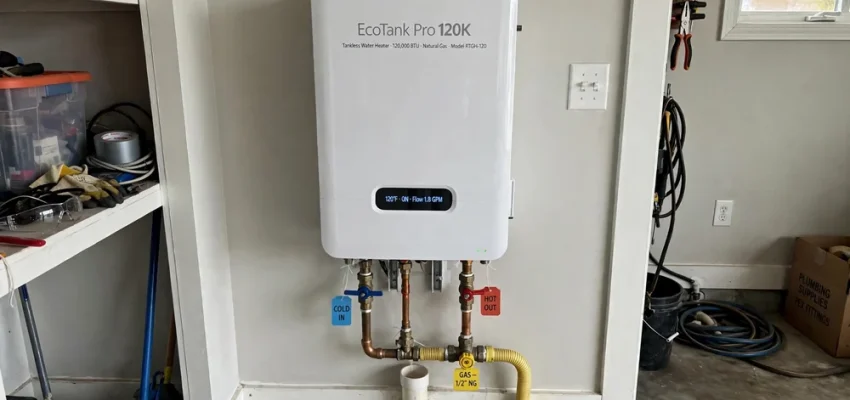

Thinking about ditching your bulky storage tank for a sleek wall-mounted unit? You are not alone. Tankless water heaters have surged in popularity across American homes, promising endless hot water and lower energy bills. But are they really worth the higher upfront cost? This honest breakdown of tankless water heater pros and cons for US homes covers everything — costs, performance, maintenance, and which households benefit most — so you can decide with confidence.
Unlike traditional tanks that keep 40 to 80 gallons hot around the clock, tankless units fire up only when you turn on the tap. Cold water flows through a heat exchanger, and gas burners or electric elements heat it instantly. No storage, no standby heat loss, no running out mid-shower — at least in theory. The reality, as with any home upgrade, comes with tradeoffs worth understanding before you spend thousands.
How Tankless Water Heaters Work
When you open a hot water tap, a flow sensor triggers the heating elements. Gas models ignite powerful burners (typically 150,000 to 200,000 BTUs); electric models engage heavy-duty heating coils. Water heats as it passes through, delivering a continuous supply. Turn off the tap, and the unit shuts down within seconds.
This on-demand design eliminates the standby energy loss that makes tank heaters inefficient — the constant reheating of stored water, even at 3 a.m. when nobody needs it. The Department of Energy estimates tankless units are 24 to 34 percent more efficient than conventional tanks for homes using under 41 gallons daily. For larger households, efficiency gains are smaller (8 to 14 percent) but still meaningful over a 20-year lifespan.
Most US homes need a unit sized to their peak demand, measured in gallons per minute (GPM). A single shower uses about 2 GPM; a dishwasher adds 1 to 2 GPM. Northern states with cold groundwater (40–50°F incoming) need bigger, pricier units than southern states where groundwater arrives at 65–75°F. Sizing mistakes are the top cause of tankless disappointment — more on that below.
Tankless Water Heater Pros
Endless Hot Water
The headline benefit is real: a properly sized tankless unit never runs out. Back-to-back showers, laundry running while someone bathes, filling a deep soaking tub — the hot water keeps flowing. For large families or homes with teenagers who take marathon showers, this alone can justify the upgrade. Compare that to a 50-gallon tank, which delivers roughly 35 to 40 minutes of showering before going cold.
Lower Energy Bills
Because there is no standby loss, most households save $100 to $200 per year on utility bills. Over a 20-year lifespan, that adds up to $2,000 to $4,000 — often covering the price premium over a tank heater. Savings are biggest in homes with moderate hot water use and in regions with high energy costs, like California, New York, and New England. Pairing with good water heater maintenance habits maximizes these savings.
Much Longer Lifespan
Tankless units last 20 to 25 years with proper care — nearly double the 8- to 12-year life of tank heaters. Fewer replacements mean less hassle and lower lifetime cost, even after accounting for the higher purchase price. Many manufacturers offer 12- to 15-year heat exchanger warranties, versus 6 to 9 years on tank models.
Space Savings
A tankless unit is roughly the size of a carry-on suitcase and mounts on the wall. Reclaiming the floor space of a 50-gallon tank (about 2 feet wide and 5 feet tall) matters in small utility closets, condos, and apartments. Some homeowners install the unit outdoors (in mild climates) or in the attic, freeing indoor space entirely.
No Flood Risk From Tank Failure
Tank heaters fail catastrophically — 75 gallons of water flooding your basement or garage. It is one of the most common homeowner insurance claims. Tankless units hold almost no water, so a failure means a small leak at worst, not a flood. If you have ever dealt with the aftermath, our breakdown of water damage restoration cost in USA shows why prevention matters.
Fresh, Cleaner Water
Stored hot water can accumulate sediment, rust, and bacteria (including Legionella in lukewarm tanks). Tankless systems deliver water straight from the supply, heated on the spot. Many homeowners notice better-tasting hot water, and households with water softener installation see even better results since scale cannot settle in a tank.
Tankless Water Heater Cons
High Upfront Cost
The biggest drawback is price. While a standard tank replacement runs $1,200 to $2,200, tankless installation typically costs $2,500 to $5,500 in the USA. The unit itself is $1,000 to $2,500, but labor often exceeds the equipment cost because retrofits require upgraded gas lines, new venting, and sometimes electrical panel work. See our full breakdown of water heater replacement cost in USA 2026 for detailed comparisons.
Expensive Retrofit Requirements
Swapping a tank for tankless is rarely plug-and-play. Gas tankless units need a larger gas line (often 3/4-inch upgraded to 1-inch) because they draw far more BTUs on demand. They also need dedicated stainless-steel venting — standard B-vent will not handle the exhaust temperatures. Electric tankless models may require 120 to 200 amps of dedicated service, sometimes forcing a electrical panel upgrade. These hidden costs surprise many homeowners mid-project.
The “Cold Water Sandwich”
Tankless heaters have a brief delay before hot water arrives, and turning the tap off and on quickly can produce a burst of cold water — the infamous “cold water sandwich.” It happens because the unit needs a few seconds to reignite and reheat. Most families adapt quickly, and recirculation pumps ($500–$800 installed) can eliminate the wait, but it is an adjustment after years of instant tank hot water.
As homeowners weigh the benefits of upgrading to a tankless water heater, it’s essential to consider the broader implications of home maintenance costs that can arise from various plumbing systems. While the allure of endless hot water is compelling, it’s equally important to factor in potential expenses related to drainage and plumbing maintenance that may not be immediately apparent. For instance, understanding the typical expenses associated with plumbing services can provide a clearer picture of your overall household budget. Many homeowners may find themselves navigating the complexities of unexpected plumbing issues, which can range significantly in cost, as detailed in the comprehensive guide on drain cleaning cost USA. By being informed about these potential costs, you can make a more holistic decision regarding the switch to a tankless system, ensuring it aligns with both your immediate needs and long-term financial planning.
Flow Rate Limitations
A single tankless unit can be overwhelmed if too many fixtures run at once. A mid-size gas unit delivers 7 to 10 GPM — enough for two showers plus a dishwasher, but not three showers plus laundry simultaneously. Undersized units are the number one complaint. Proper sizing by a qualified contractor is essential; when in doubt, size up. If your household routinely maxes out demand, you may need two units in parallel, doubling equipment costs.
Maintenance Demands
Tankless units need annual descaling (flushing with vinegar solution) to prevent mineral buildup in the heat exchanger — especially critical in hard-water regions like Arizona, Texas, and Florida. Skip maintenance and efficiency drops, error codes appear, and the heat exchanger can fail prematurely. Professional descaling costs $150 to $250 per visit. Tank heaters need flushing too, but they are more forgiving of neglect.
Inconsistent Temperature in Some Situations
Low-flow fixtures can confuse older tankless models — if flow drops below the activation threshold (often 0.5 GPM), the burner shuts off and water goes cold. Modern units handle low flow better, but it remains a consideration with water-saving faucets. Power outages also kill gas tankless units (they need electricity for the igniter and controls), whereas a tank heater keeps delivering stored hot water for hours.
Gas vs Electric Tankless: Which Is Better?
Gas tankless heaters dominate the US market for good reason: they deliver higher flow rates (7–12 GPM) at lower operating cost where natural gas is available. A gas unit costs more to install (venting, gas line upgrades) but less to run — typically $150 to $250 per year versus $400 to $600 for electric.
Electric tankless models are cheaper to install (no venting needed) and work well as point-of-use heaters for a single bathroom or sink. But whole-house electric tankless demands enormous amperage — often requiring a 200-amp panel upgrade costing $1,500 to $3,000. In most cases, electric only makes sense where gas is unavailable or for supplemental use. Homes considering the switch should also evaluate their gas line installation options and costs.
Is a Tankless Water Heater Worth It for Your Home?
Tankless makes the most sense for specific situations. It is an excellent fit if you have a large family with high simultaneous hot water demand, live in a region with expensive energy (making efficiency savings larger), are building new construction (retrofit costs disappear), have limited space, or plan to stay in your home 10+ years to recoup the investment.
Stick with a tank if your household is small (1–2 people), you are on a tight budget, your home has very hard water and you will not maintain the unit, or you need the absolute lowest installation cost. There is no shame in a reliable tank — modern high-efficiency tanks with good insulation are far better than models from 20 years ago.
Also weigh your water quality. If you have not tested it, our guide to how to test your water quality in USA is a smart first step — hard water shortens the life of any heater, tankless especially. And if your plumbing is aging, factor in whether repiping a house might be needed before investing in premium equipment.
Installation Tips and What to Ask Your Contractor
Choosing the right installer matters as much as choosing the right unit. Ask every bidder: What GPM size do you recommend for my household and climate, and how did you calculate it? What gas line, venting, or electrical upgrades are included in your quote? Is the quote all-inclusive (permits, disposal, code upgrades)? What is the warranty on parts and labor separately?
Get three written quotes minimum. Prices for identical tankless installations can vary by $1,500 or more between contractors. Verify licensing and insurance, check reviews, and confirm they will pull a permit — unpermitted gas work is dangerous and can void your homeowner’s insurance. Our checklist for how to find a reliable plumber near you in USA applies equally to tankless specialists.
After installation, schedule annual descaling from day one — put it on your calendar like an oil change. Keep the area around the unit clear, check the condensate drain (on condensing models), and watch for error codes. With consistent care, your tankless unit should deliver two decades of endless hot showers. And if you ever notice signs of a water leak in your home near the unit, address it immediately — even small leaks can damage walls and flooring over time.
Frequently Asked Questions
Do tankless water heaters really save money?
Yes, but payback takes time. Expect $100–$200 annual savings. On a $3,000 price premium over tank, breakeven arrives in roughly 10–15 years — well within the 20-year lifespan. Homes with high energy rates break even faster.
Can a tankless heater handle a large soaking tub?
A properly sized gas unit can fill even large tubs continuously — that is actually where tankless shines versus a tank that runs dry. Just verify the GPM rating covers the tub filler’s flow rate plus any simultaneous use.
Do I need a water softener with tankless?
Strongly recommended in hard-water areas. Scale buildup is the number one killer of tankless heat exchangers. A softener plus annual descaling keeps the unit running at peak efficiency for its full lifespan.
Weighing tankless water heater pros and cons for US homes comes down to your household size, budget, timeline, and local energy costs. For the right family in the right situation, tankless delivers unmatched convenience and long-term savings. For others, a quality tank heater remains the smart, economical choice. Either way, professional sizing and installation make all the difference.
Still deciding? Compare with heat pump water heater cost in 2026 — a tank-style option that uses up to 60 percent less electricity and may qualify for generous rebates.
For a full breakdown of equipment and installation pricing, see our 2026 tankless water heater cost guide.