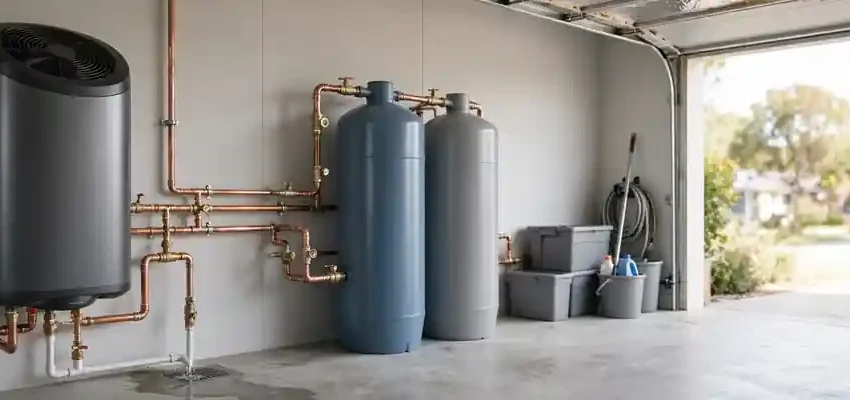

If you are shopping for a new water heater in 2026, the heat pump water heater cost is probably the first number you want to pin down. These hybrid units promise dramatic energy savings, but they also carry the highest price tag of any tank-style water heater on the market. Understanding the full cost picture — equipment, installation, electrical upgrades, permits, and the rebates that remain — is essential before you commit. In this guide, we break down exactly what American homeowners are paying this year, how those numbers compare to standard electric and gas tanks, and how to calculate your real payback period.
Heat pump water heaters (also called hybrid water heaters) pull warmth from the surrounding air and transfer it into the water instead of generating heat directly. As a result, they use 50 to 70 percent less electricity than a standard electric tank, which translates into roughly $200 to $300 in annual energy savings. However, the units are larger, noisier, and more complex to install than conventional tanks, and they need warm, spacious surroundings to perform well.
Heat Pump Water Heater Cost: The 2026 Price Breakdown
The total installed heat pump water heater cost in the USA typically falls between $3,500 and $6,500. The national average often cited by contractors and industry surveys sits near $4,800. That wide spread exists for good reason: tank size, electrical work, condensate handling, permit fees, and local labor rates can all move the final number by hundreds or even thousands of dollars.
To see where your money goes, it helps to split the cost into equipment and everything else. The unit itself is the single biggest line item, but installation extras frequently add $1,500 to $3,000 on top of the hardware. For example, a garage installation with existing 240-volt service will cost far less than a basement retrofit that needs a new dedicated circuit, a condensate drain, and a plumbing reconfiguration.
Equipment Costs: $1,500 to $3,000
The water heater unit alone generally costs between $1,500 and $3,000 for 50 to 80 gallon models. The 50-gallon size suits most households of two to four people, while larger families often need the 65 or 80 gallon option. Major brands such as Rheem, AO Smith, and Bradford White all offer hybrid models, and prices rise with tank capacity and warranty length.
Keep in mind that the sticker price at a big-box retailer is not the whole story. Contractors often mark up equipment or bundle it with installation, so an itemized quote is the only reliable way to compare bids. Make sure every contractor is quoting a comparable model — same tank size, first-hour rating, and warranty terms.
Installation Costs: What Pushes the Total Higher
Professional installation usually adds $1,500 to $3,000 beyond the unit price. Several factors drive this portion of the bill. First, these units are taller and heavier than standard tanks, which complicates delivery and placement. Second, they require a dedicated 240-volt circuit; if your panel lacks capacity or space, an electrician may need to upgrade the panel or run a new line, adding several hundred dollars.
Third, heat pump water heaters produce condensate — water pulled from the air as a byproduct of the heat-pump process. The installer must route this condensate to a drain, which sometimes means running new piping through a finished basement. Finally, most jurisdictions require a plumbing permit, which typically runs $25 to $300 depending on the city.
Because these complexities are unique to hybrid technology, get itemized quotes from plumbers experienced with heat-pump models specifically. A contractor who has installed dozens of hybrid units will spot issues — like insufficient clearance or an undersized circuit — that a generalist might miss. Investing in finding a reliable plumber with hybrid experience pays for itself in fewer callbacks and a cleaner install.
Heat Pump Water Heater Cost vs. Standard Tanks in 2026
Context matters. A standard electric tank water heater costs roughly $1,150 to $1,800 installed, while a gas tank runs $1,500 to $2,200 installed. Compared to those figures, a heat pump model at $3,500 to $6,500 looks expensive — roughly double or triple the upfront cost. The question is whether the energy savings close that gap over the unit’s lifetime.
Compared against a broader water heater replacement cost landscape, heat pump models sit at the premium end of the tank category. They cost more than any conventional tank but generally less than a full tankless conversion, especially once the gas-line or venting work that tankless units often require is factored in. Homeowners still on the fence should review our guide to tankless water heaters before deciding, since each technology saves energy in a different way.
Energy Savings vs. the Heat Pump Water Heater Cost
Heat pump water heaters use 50 to 70 percent less electricity than standard electric tanks. For an average American household, that efficiency advantage translates into $200 to $300 per year in lower utility bills. Over the 10 to 15 year lifespan of the unit, cumulative savings can reach $2,000 to $4,500 — enough to erase the price premium over a conventional electric tank in many cases.
However, your actual savings depend on your electricity rate and usage habits. In states with high power prices, such as California, Hawaii, or the Northeast, the savings land at the top of that range and the payback period shortens. In states with cheap electricity, the savings are smaller and the payback stretches longer.
Heat Pump Water Heater Cost Payback Period
Most homeowners reach the break-even point in roughly 4 to 8 years. Consider a typical scenario: a $4,800 installed heat pump unit replacing a standard electric tank that would have cost $1,500 installed. The $3,300 premium, offset by $250 in annual energy savings, pays back in about 13 years — borderline. But if utility and manufacturer rebates knock $800 off the upfront cost, the effective premium drops to $2,500 and payback falls to about 10 years. In a high-rate state with $350 in annual savings, payback can drop below 7 years.
Meanwhile, homeowners replacing a gas tank face a tougher calculation, since gas is cheaper than electricity per unit of heat in most regions. For those households, the financial case for switching to a heat pump model is weaker unless a panel upgrade is cheap or rebates are generous.
2026 Rebates and Incentives: What Is Left
This is the section where 2026 brings the most important news — and it is not good news. The federal 25C Energy Efficient Home Improvement Credit, which offered a 30 percent credit up to $2,000 for heat pump water heaters, EXPIRED on December 31, 2025. The One Big Beautiful Bill Act ended the program, and there is currently no federal tax credit available for water heaters installed in 2026.
In addition, several state-level Home Energy Rebate (HEAR) programs have wound down. Notably, California and Washington closed their HEAR rebate programs to new applications in February 2026. If you were counting on those state incentives, check your state energy office for the latest status, because the landscape is shifting quickly and remaining programs may close without much warning.
Remaining Utility and Manufacturer Rebates
All is not lost. Utility rebates and manufacturer promotions are still available in many service territories, typically worth $200 to $1,000 combined. Many electric utilities offer prescriptive rebates for heat pump water heaters because the load reduction helps them manage peak demand. These rebates are usually claimed at the time of purchase or shortly after installation, often with a simple online form and proof of purchase.
Manufacturers also run seasonal promotions, sometimes bundling extended warranties with cash-back offers. To maximize what you capture, check your utility’s rebate portal before you buy — not after. Some rebates require pre-approval or the use of a participating contractor.
If your project also involves electrical work, it is worth reviewing plumber costs and electrician costs so the combined project budget stays realistic. Meanwhile, pairing the install with seasonal HVAC deals on equipment can sometimes trim a few hundred dollars off the total.
Installation Requirements You Must Know
Heat pump water heaters are pickier about their environment than conventional tanks. Understanding these requirements before you buy prevents the expensive surprise of a unit that cannot perform in your space.
Temperature and Space Requirements
These units require ambient temperatures above approximately 40°F to run efficiently. Below that threshold, most models switch to backup electric resistance heating — which erases the efficiency advantage you paid for. That makes unheated garages in northern climates a questionable location for at least part of the year.
Adequate space and ventilation are equally important. A typical hybrid unit needs a room of at least 700 to 1,000 cubic feet, or a louvered door that lets it draw air from adjacent spaces. Squeezing one into a small sealed closet will starve the heat pump of airflow and cripple its performance.
Electrical, Condensate, and Permits
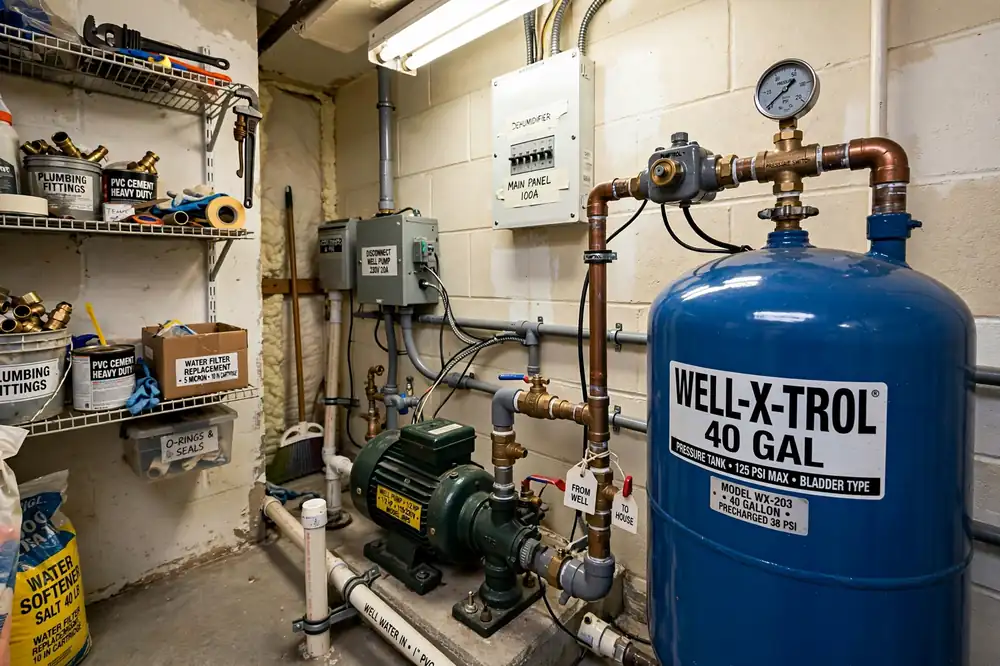
Most hybrid models need a dedicated 240-volt, 30-amp circuit. Older homes with 100-amp panels may need a panel upgrade, which can add $1,000 to $2,500 to the project. Before committing, have an electrician confirm your panel has the capacity — and if you need help finding an electrician for the assessment, start that search early since panel work can delay the whole project.
Condensate handling is the detail homeowners forget. The unit can produce several gallons of condensate per day in humid conditions, so the installer must run a drain line to a floor drain or condensate pump. Permits typically cost $25 to $300 and are required in most jurisdictions.
How to Get the Best Price in 2026
Smart shopping can easily save you $500 to $1,500 on a heat pump water heater installation. Start by collecting at least three itemized quotes from contractors who have installed hybrid models before. Itemization matters: it lets you see exactly what the electrical work, condensate routing, and permit fees cost, and it exposes bids that hide profit in vague lump sums.
Timing helps too. Contractors are often less busy in late winter and early spring, and some offer off-season discounts. If your current water heater still works, you have the luxury of scheduling the replacement during a slow period rather than paying emergency rates when it fails. Speaking of emergencies, a failed tank can also cause water damage that requires drain cleaning or other remediation — another reason to plan ahead.
Finally, think about the unit as part of your home’s larger mechanical system. A well-maintained home runs more efficiently overall, and regular HVAC maintenance pairs naturally with a water heater upgrade. If your air conditioner is also aging, some homeowners coordinate the projects — an AC replacement and a hybrid water heater in the same year can simplify contractor scheduling.
Is a Heat Pump Water Heater Worth It in 2026?
The honest answer depends on your home, your utility rates, and the rebates available in your area. The technology itself is proven: 10 to 15 years of reliable service, 50 to 70 percent lower electricity use than a standard electric tank, and meaningful annual savings of $200 to $300. For households with high electricity rates, a warm installation location, and access to utility rebates, the heat pump water heater cost premium pays for itself well within the unit’s lifespan.
However, the 2026 incentive landscape is thinner than it was. With the federal 25C credit expired and several state HEAR programs closed to new applicants, the net cost is higher than it would have been in 2024 or 2025. That makes the payback math tighter — not impossible, but no longer a slam dunk everywhere.
If your current tank is nearing the end of its life, get those itemized quotes now, verify your remaining rebates, and model the payback with your actual utility rate. In the right home, a heat pump water heater remains one of the smartest efficiency upgrades you can make in 2026.