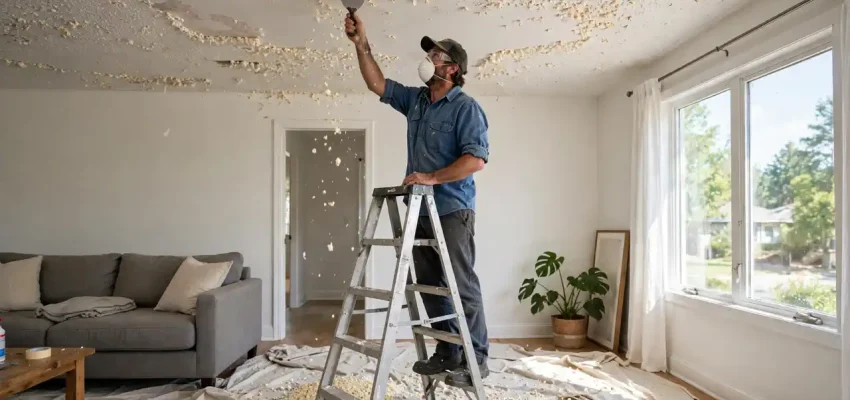

Popcorn ceilings had their moment — roughly 1945 to 1990 — and for millions of American homeowners that moment is long over. The bumpy, cottage-cheese texture dates a room instantly, traps dust, and makes a fresh coat of paint nearly impossible. Removing it is one of the highest-impact cosmetic upgrades you can make, which is why popcorn ceiling removal cost is searched hundreds of thousands of times a year in the USA.
In 2026, professional popcorn ceiling removal costs $1–$3 per square foot, or roughly $900–$2,700 for a typical home. A single room runs $300–$800. The biggest cost variable is not the scraping — it is asbestos: ceilings installed before the mid-1980s must be tested, and asbestos-containing texture requires licensed abatement at $3–$7 per square foot. This guide covers 2026 pricing, the asbestos question, removal versus cover-up options, and how to get smooth, modern ceilings without surprises.
How Much Does Popcorn Ceiling Removal Cost in 2026?
The national average popcorn ceiling removal cost is about $1.75 per square foot in 2026 for straightforward scrape-and-finish work with no asbestos. Here is how that translates to real rooms:
Single bedroom (150 sq ft): $300–$600. Living room (300 sq ft): $500–$900. Whole house (1,500 sq ft of ceilings): $1,800–$4,000. These ranges include scraping, minor drywall repair, and a basic smooth finish ready for paint — but not the paint itself, which typically adds $1–$2 per square foot.
Most contractors price by the square foot with a minimum charge of $250–$400, so tiny jobs (a closet or small bathroom) cost disproportionately more per foot. Getting the whole house or at least a full floor done at once brings the per-foot rate down significantly — the same bundling logic that saves money on house painting projects.
The Asbestos Question: Test Before You Scrape
This is the most important section of this guide. Acoustic ceiling texture installed before about 1985 may contain asbestos — industry estimates suggest up to 10% of it does. Asbestos fibers are harmless when sealed in the ceiling but dangerous when airborne, and scraping releases them. Federal and state regulations require testing and, if positive, licensed abatement.
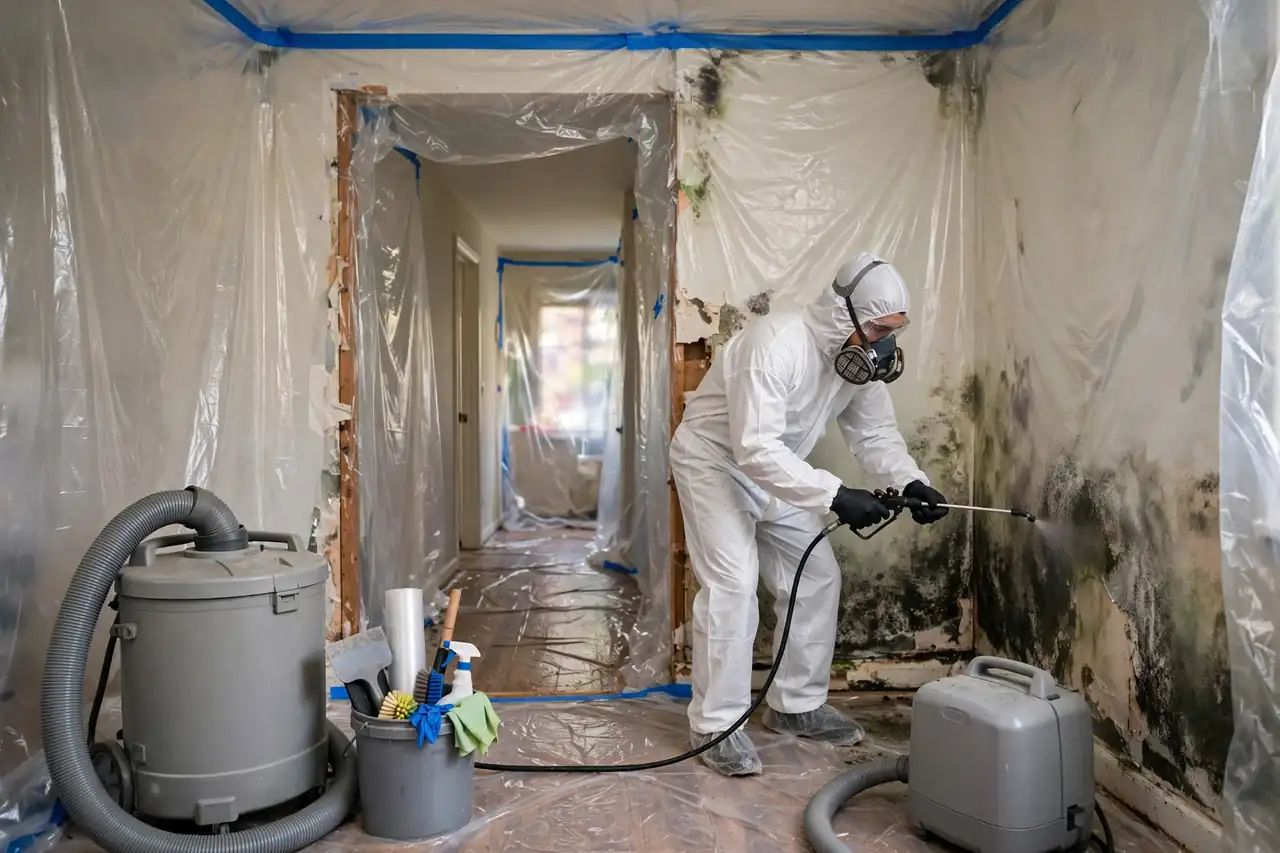
Asbestos testing costs $50–$150 for a lab-analyzed sample kit (some labs charge $25–$50 per sample with a 3-sample minimum). You can collect samples yourself with proper precautions, or hire an inspector for $200–$400. Licensed asbestos abatement for ceilings costs $3–$7 per square foot — roughly triple standard removal — because it requires containment barriers, negative air pressure, HEPA filtration, and certified disposal.
Never scrape a pre-1985 ceiling without testing. The health risk is real, and improper DIY asbestos removal can create legal liability when you sell the home. If your test comes back positive, the abatement cost is non-negotiable — but it is still far cheaper than the medical and legal consequences of exposure. Homes of this vintage often need other updates too, from mold remediation in damp areas to checking for hidden water leaks that textured ceilings may have concealed.
What Is Included in Popcorn Ceiling Removal Cost?
A professional job follows a consistent sequence. First, the room is sealed: floors covered, walls masked, vents and fixtures protected. Then the texture is softened (usually with a water spray) and scraped off with specialized blades. Next comes drywall repair — the scraping inevitably reveals dings, seams, and nail pops that need joint compound and sanding. Finally, the ceiling gets a skim coat or texture of your choice (smooth, knockdown, or orange peel) and is primed.
Standard quotes include all of this plus cleanup. They typically do not include painting (add $200–$500 per room), replacing light fixtures or ceiling fans removed during the work, or repairing significant drywall damage beyond normal scraping wear. If your ceilings have never been painted, removal is easier and cheaper — painted popcorn texture resists water softening and can double the labor time. Ask your contractor specifically how they handle painted texture, because it is the most common reason quotes come in higher than expected.
Removal vs. Cover-Up: Cheaper Alternatives
Full removal is not the only path to smooth ceilings. Skim coating ($1.50–$3 per square foot) applies thin layers of joint compound directly over the popcorn, burying the texture without scraping. It avoids the asbestos-disturbance question in some jurisdictions (check local rules) and creates less mess, but it adds weight and does not work on loose or damaged texture.
Installing new drywall over the old ceiling ($2–$4 per square foot) encapsulates everything — including any asbestos — beneath a fresh surface. It lowers ceiling height by about half an inch and requires re-trimming, but it is fast and definitive. Ceiling planks or panels ($3–$7 per square foot installed) add a decorative wood-look finish while hiding the texture entirely.
Each option has tradeoffs, but all four beat living with dated texture if you are updating a home for sale — smooth ceilings consistently photograph better and appraise as more modern, a small upgrade with outsized impact similar to a well-planned home addition on a smaller scale.
DIY Popcorn Ceiling Removal: Cost and Reality Check
DIY removal costs $100–$300 in tools and materials for an average room: a garden sprayer, scraping blades, joint compound, sandpaper, plastic sheeting, and a good respirator. Countless homeowners have done it successfully, and the technique itself is straightforward — wet, scrape, repair, skim, prime.
The reality check is the mess and the time. It is among the messiest DIY projects in home improvement: fine dust coats everything despite your best masking, and a single room takes a full weekend for a beginner. Overhead work is physically punishing on the neck and shoulders. And the asbestos rule still applies — DIY does not exempt you from testing or abatement requirements.
DIY makes sense for one small room with post-1990 texture, confirmed asbestos-free, where you have time and tolerance for dust. For whole houses, painted texture, or any pre-1985 ceiling, hire a pro. The per-foot savings evaporate once you factor in your time, tool costs, and the finish quality gap — professional drywall finishers produce noticeably smoother results, just as pros do with drywall repair.
What Affects Popcorn Ceiling Removal Cost?
Asbestos status is the dominant factor — abatement triples the price. Painted versus unpainted texture: painted popcorn resists softening and can double labor time. Ceiling height: vaulted or 10-foot ceilings add 25–50% for scaffolding and slower work. Room count and size: larger total square footage earns volume discounts. Finish choice: a basic knockdown texture costs less than a Level 5 glass-smooth finish, which requires multiple skim coats. Location: expect 20–30% premiums in high-cost coastal metros.
Hidden damage is the wildcard. Scraping sometimes reveals water stains, sagging drywall, or old repairs that need fixing before finishing — budget a 10–15% contingency. If stains suggest active moisture, investigate the source first; ceiling work pairs logically with basement waterproofing reviews and roof checks, since water travels downward and stains appear far from the leak.
How to Hire the Right Contractor
Look for drywall and painting contractors (not general handymen) with specific popcorn-removal experience and photos of finished work. Verify they test for asbestos or require your test results before starting — any contractor willing to scrape a 1970s ceiling untested is one to avoid. Get three itemized quotes specifying square footage, asbestos handling, repair scope, finish level, and whether paint is included.
Check reviews for mentions of dust control and cleanup quality — the difference between a good and bad ceiling contractor is mostly in the masking and the final sanding. Confirm licensing and insurance, get the timeline in writing (most single rooms take 2–3 days including drying time between coats), and never pay more than a third upfront. The same vetting discipline applies across trades, whether you are hiring a general contractor or comparing roof repair bids.
Popcorn Ceiling Removal Cost FAQs
How much does it cost to remove popcorn ceiling from a 1,500 sq ft house?
Typically $1,800–$4,000 for scrape-and-finish with no asbestos, not including paint. Asbestos abatement would raise the total to $4,500–$10,500.
Can you just paint over popcorn ceiling?
You can, but it is a compromise: paint seals in dust and makes future removal much harder and more expensive. If you plan to remove the texture eventually, do not paint it first.
Does removing popcorn ceiling increase home value?
It improves perceived value and marketability — buyers consistently prefer smooth ceilings, and listings photograph better. Appraisers rarely add a line item for it, but it helps homes sell faster and closer to asking price.
How long does popcorn ceiling removal take?
A single room takes 2–3 days including drying time between skim coats. A whole house takes 1–2 weeks depending on size and crew size.
Is it safe to sleep in the house during removal?
For standard non-asbestos removal, yes, though dust control matters — seal off work zones and run air purifiers. During asbestos abatement, the contained work area must stay sealed and unoccupied until clearance testing passes.
The Bottom Line on Popcorn Ceiling Removal Cost
At $1–$3 per square foot, popcorn ceiling removal is one of the most cost-effective cosmetic transformations in home improvement — a few thousand dollars visually modernizes an entire home. The non-negotiable step is asbestos testing for any pre-1985 ceiling; everything else is planning and execution. Get itemized quotes, bundle rooms for volume pricing, budget for paint on top, and hire a drywall specialist with proven dust control.
Done well, smooth ceilings change how every room feels — brighter, cleaner, and current. It is the kind of update that, like fresh exterior pressure washing or a properly scheduled HVAC tune-up, pays back in daily enjoyment long before it ever pays back at resale. Most homeowners who finally remove their popcorn ceilings say the same thing: they wish they had done it years earlier instead of living with another decade’s design trend — right up there with finally calling the plumber about that slow drain you have ignored for a year.