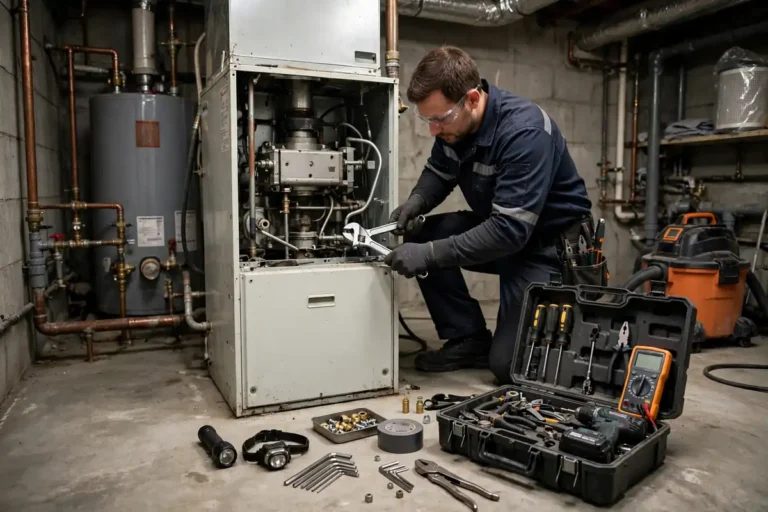

When your furnace stops working on a cold night, comfort becomes urgent fast. But before you agree to a costly replacement, it helps to know what furnace repair cost actually looks like in 2026. Most furnace problems are repairable, and the typical repair bill is a few hundred dollars, not a few thousand. A failed igniter, a dirty flame sensor, or a worn blower motor are all routine fixes for an experienced technician.
This guide covers furnace repair cost in 2026: common repairs and their prices, how to recognize symptoms, when repair stops making sense, and how to hire an HVAC technician who diagnoses honestly. Whether you have a gas, electric, or oil furnace, you will learn what a fair bill looks like and how to avoid paying for a replacement you do not need.
Furnace Repair Cost in 2026: National Averages
Most furnace repairs cost $150 to $700, with a national average near $350 for a standard gas furnace repair. Minor repairs like a flame sensor cleaning or thermostat replacement run $100 to $250. Mid-range repairs like an igniter, blower motor, or control board run $250 to $700. Major repairs like a heat exchanger replacement can run $1,000 to $2,500, and at that point replacement often makes more sense.
Emergency or after-hours service adds $100 to $300 to the bill. If your furnace fails during a mild spell and you can use space heaters safely for a night, waiting until morning can save a significant surcharge. If temperatures are below freezing, however, do not wait: frozen pipes cause far more damage than an emergency callout fee. Diagnostic fees typically run $75 to $150 and are often credited toward the approved repair.
Common Furnace Repairs and Their Costs
- Thermostat replacement: $150 to $350, including a basic programmable model
- Igniter replacement: $150 to $350
- Flame sensor cleaning or replacement: $100 to $250
- Blower motor replacement: $400 to $800
- Inducer motor replacement: $350 to $700
- Control board replacement: $400 to $800
- Gas valve replacement: $400 to $700
- Capacitor replacement: $100 to $250
- Limit switch replacement: $150 to $300
- Heat exchanger replacement: $1,000 to $2,500, often a replacement trigger
The flame sensor is the most common culprit behind a furnace that starts and then shuts off within minutes. Soot buildup on the sensor tells the control board the burner failed to light, so it shuts down for safety. Cleaning or replacing the sensor is quick, cheap, and fixes the problem in most cases. If a technician immediately recommends a new furnace for this symptom without checking the sensor, get a second opinion.
Furnace Repair Cost by Symptom
Furnace will not turn on at all
Check the thermostat setting, batteries, breaker, and furnace power switch before calling. If those are fine, the problem is often the igniter, control board, or a tripped safety switch. Most no-start repairs cost $150 to $500. A technician will test components in sequence rather than replacing parts blindly, and a good diagnosis saves you from paying for parts you did not need.
Furnace starts then shuts off quickly
Short cycling usually points to a dirty flame sensor, a clogged air filter, or an overheating limit switch. Start with the cheapest fix: replace the air filter, which costs a few dollars and solves many short-cycling problems. If the problem persists, a flame sensor cleaning runs $100 to $200, and a limit switch replacement runs $150 to $300.
Weak airflow or cold air from vents
Weak airflow often means a failing blower motor, a clogged filter, or blocked ductwork. Cold air from vents on a gas furnace can mean the burner is not firing, the thermostat is set to fan-only, or the unit is in a cooling cycle by mistake. Blower motor replacement is the most expensive common fix in this category at $400 to $800, while filter and thermostat fixes are far cheaper. Regular filter changes are the simplest way to prevent many of these calls.
Strange noises: banging, squealing, or rattling
Banging at startup can indicate delayed ignition, which needs prompt attention. Squealing usually means a worn blower belt or motor bearing. Rattling often means a loose panel or duct section. Noise repairs range from $100 for a belt or panel fix to $700 for a motor replacement. Never ignore banging or a burning smell, since both can indicate gas or electrical problems.
Uneven heating between rooms
Some rooms hot, others cold, usually points to ductwork issues, poor insulation, or an undersized system rather than a furnace failure. A technician can check duct balance and airflow, but the fix may involve duct sealing or added insulation rather than furnace parts. Improving attic insulation often does more for uneven heating than any furnace repair, since heat escapes through a poorly insulated attic before it ever reaches your rooms.
Gas vs Electric vs Oil Furnace Repair Cost
Gas furnaces are the most common in the USA and have the widest repair price range, since they combine gas, electrical, and venting systems. Electric furnaces are simpler, with fewer parts, so repairs tend to run $100 to $500, mostly heating elements, sequencers, and thermostats. Oil furnaces cost more to service, at $200 to $800 per repair, because they need regular nozzle, filter, and combustion chamber maintenance, and fewer technicians specialize in them.
Regardless of fuel type, age matters. A furnace over 15 years old uses older, sometimes discontinued parts, and repair costs rise accordingly. If your furnace is that old and needs a major repair, compare the repair quote against replacement before authorizing work.
When to Repair vs Replace Your Furnace
Repair when the furnace is under 15 years old, the repair costs less than half the replacement price, and breakdowns are infrequent. Replace when the furnace is over 15 to 20 years old, the heat exchanger is cracked, repairs exceed $1,000 on an old unit, or your energy bills keep climbing despite repairs. A cracked heat exchanger is a safety issue, since it can leak carbon monoxide, and it almost always means replacement.
A new gas furnace installed costs $3,500 to $8,000, depending on efficiency rating and home size, while a high-efficiency or variable-speed model runs $6,000 to $12,000. If your furnace is aging and your air conditioner is too, replacing both together often saves $1,000 or more versus separate jobs. Compare AC replacement costs if you are considering a combined system upgrade, and review HVAC deal pitfalls before jumping on a seasonal promotion that may hide inflated base pricing.
How to Hire an HVAC Technician for Furnace Repair
Choose a licensed, insured HVAC contractor with furnace-specific experience, and confirm the technician is certified for your fuel type. Get a written estimate before work begins, ask whether the diagnostic fee is credited toward the repair, and confirm parts and labor warranties. A reputable technician explains the diagnosis, shows you the failed part when possible, and gives you repair and replacement options with prices for both.
Be cautious of any technician who condemns a furnace without testing, pressures you into an immediate replacement, or refuses to provide a written quote. Carbon monoxide safety is a legitimate concern with gas furnaces, and a good technician will test for it, but that test does not automatically mean you need a new system. If you are told the heat exchanger is cracked, ask to see the evidence and get a second opinion before spending thousands.
Regular maintenance prevents most furnace repairs. A yearly tune-up costs $100 to $200 and includes cleaning, safety checks, and efficiency testing. Our HVAC maintenance checklist covers what a proper tune-up should include, so you can tell whether your technician is thorough or just going through the motions.
Furnace Maintenance That Prevents Repairs
Change your air filter every one to three months during heating season. Keep vents and returns unblocked by furniture and rugs. Keep the area around the furnace clear, check the condensate drain for clogs, and schedule a professional tune-up every fall before heating season begins. A fall tune-up catches worn igniters, dirty sensors, and weak motors before they fail on the coldest night of the year.
Also protect the system from the outside. A well-sealed, well-insulated home makes your furnace work less, which extends its life. Seasonal exterior work matters too: clean gutters before winter so ice dams do not form, and check the roof before storm season. If gutters are part of your fall checklist, review gutter guard costs and roof repair costs alongside your furnace tune-up for a complete winter-prep plan.
Ways to Save on Furnace Repair Cost
Schedule non-emergency repairs during business hours to avoid after-hours surcharges. Join a maintenance plan if your contractor offers one, since plans often include priority service and discounted repairs. Replace filters yourself, keep the system clean, and address small symptoms early, since a $150 sensor cleaning today prevents a $500 emergency call on a freezing night.
If your furnace and other major systems are aging, a home warranty may help, though coverage limits and exclusions vary. Review home warranty costs and confirm furnace coverage terms before relying on a plan. And if a repair uncovers wider home issues, such as dampness affecting indoor air, review mold remediation costs early, since moisture and heating problems often appear together in older homes.
Conclusion: Is Furnace Repair Worth It?
For most furnaces under 15 years old, yes. Furnace repair cost of $150 to $700 restores heat quickly and cheaply, while a premature replacement wastes thousands. Diagnose first, repair when sensible, and replace only when the heat exchanger fails, the unit is past its lifespan, or repairs exceed half the replacement price.
Change filters regularly, schedule a fall tune-up, and call a licensed technician for anything involving gas or electricity. A well-maintained furnace runs quieter, heats more evenly, and lasts years longer than a neglected one. If your heating project grows into a broader home upgrade, related systems are worth pricing together, so review tankless water heater costs and drywall repair costs as you plan the full scope of your home improvement budget.